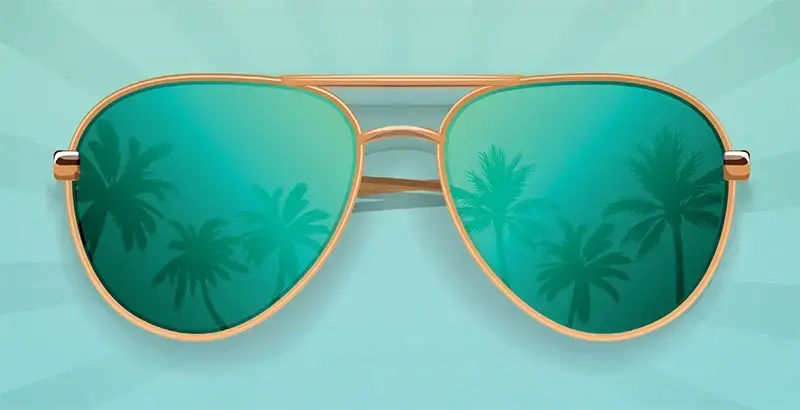
Summer’s here and we’re all heading outside to soak up that sunshine. You’ve likely considered sunscreen (we hope!), but make sure you’re taking ample action to protect your eyes as well
Written by Kinsey Gidick
While those $15 drugstore shades may look sharp, many don’t offer the 100-percent protection from ultraviolet radiation needed to protect your eye health, says Roper St. Francis Healthcare affiliated ophthalmologist Joe Lally. “It’s important to think of sunglasses as a preventative health tool rather than just a fashion statement,” he says. Dr. Lally notes that daily use of UV-blocking shades is one of the chief ways to reduce your risk of developing serious age-related eye diseases like cataracts and macular degeneration. Read on for more on conditions caused by UV exposure and for tips on how protect your eyesight during the sunny season and beyond.
Anatomy of Your Eyes
In order to properly protect your eyes, it can help to understand how they work. After bouncing off whatever objects you’re viewing, light rays enter the eyes through the cornea: the clear protective outer layer, or “the window of the eye,” explains Dr. Lally. The cornea refracts, or bends, the rays so that they pass through the pupil—the black center of the colored iris, which grows and shrinks like the shutter of a camera to let more or less light in. From there, the rays pass through the lens, which focuses the image on the retina. “This bundle of information is then converted into electrical impulses that are sent to the brain via the optic nerve,” says Dr. Lally.
The Daily Damage
Non-harmful visible light rays allow us to see the world. But another form of energy emitted by the sun—non-visible ultraviolet, or UV, rays—enters eyes as well and can damage our vision, just like it harms our skin. “Ultraviolet damage is cumulative,” explains Dr. Lally, who notes that, over time, exposure to UV radiation can increase your risk for two of the most common eye conditions: cataracts and age-related macular degeneration.
Cataracts
Cataracts, a clouding of the eye’s lens, affect more than 25 million Americans. “Cataract surgery is the most common surgery I perform,” says Dr. Lally, underscoring the condition’s pervasiveness. “By age 70, roughly 40 percent of men and 45 percent of women will have them. Symptoms include clouded or blurred vision, difficulty seeing at night or in dim lighting and glare.” Some cataracts can be left untreated; however, cataract surgery is the go-to treatment if they cause difficulty in driving or interfere with daily life. “It’s a same-day procedure in which an ophthalmologist replaces the lens of the eye with an artificial lens,” explains Dr. Lally.
Macular Degeneration
According to the American Academy of Ophthalmology (AAO) age-related macular degeneration (AMD) is the leading cause of severe vision loss among Americans age 50 and older. “AMD is basically an aging of the retina,” explains Dr. Lally. In addition to age and UV exposure, chief risk factors for AMD include having fair skin and smoking. Though there is no way to reverse vision damage caused by the most common dry form of AMD—which is marked by a gradual decline of central vision—research suggests that vitamin therapy (a prescribed increased intake of certain vitamins and minerals) may slow its progression. “Some studies show that adopting a Mediterranean diet—plant-based meals with fish, nuts and minimal meat and dairy—can help,” says Dr. Lally.
Pterygium
Lastly, people who work outdoors in especially sunny, windy locales (ours included) are at increased risk for developing pterygium (“te-ridge-e-um”), a non-cancerous, pink growth on the surface of the eye. If left untreated, the condition, which typically appears on the white of the eye close to the nose, can obscure vision, so visit an ophthalmologist if a growth appears to determine whether surgery is necessary.
Protect Your Vision
The good news? Investing in sunglasses that block UV radiation is a simple, reliable way to help ward off all of the above. “Sunglasses are like sunscreen for your eyes,” says Dr. Lally. Another major step toward protecting your vision, he says, is to schedule regular well-visit eye appointments—even if you’re not experiencing any changes in vision or discomfort. “A common myth is that you only need to visit an eye doctor regularly if you wear glasses or contacts,” say Dr. Lally, who notes that, in addition to checking your prescription, ophthalmologists also screen eyes for serious diseases like glaucoma, which is thesecond-leading cause of blindness in the U.S.
[caption id="attachment_6270" align="alignright" width="300"] Dr. Joe Lally[/caption]
“Glaucoma is associated with an increase of pressure within the eye, which can damage the optic nerve,” explains Dr. Lally. “Eyes are fluid-filled systems—they continuously make fluid and drain fluid. If the fluid is not successfully draining, the pressure within the eye and on the optic nerve increases.” When eye pressure reaches a certain level, symptoms like eye pain, nausea and vision distortion may surface. However, “Glaucoma is a sneaky ailment,” he says. “Sometimes called the ‘silent thief of sight,’ you typically don’t know pressure within your eye is high unless your doctor discovers it during an exam.”
Risk factors for glaucoma include age (a person’s risk increases after age 60), race (those who are of African, Hispanic or Asian heritage are more prone to the condition), having a family history of glaucoma and having certain chronic conditions, such as diabetes, high blood pressure and heart disease. “Glaucoma is generally treated with eye drops, laser therapy and, if necessary, incisional surgery,” says Dr. Lally.
The AAO recommends annual eye exams after age 40, but Dr. Lally urges people experiencing eye trouble not to wait. “As we age, the lens of the eye gradually becomes less flexible and less able to focus on things that are close to us,” he says. “This is not a disease; it’s just part of aging and can often be resolved by a proper prescription for reading glasses.” People with diabetes, who are at increased risk for conditions like cataracts and glaucoma, should get an eye exam at least once a year.
Beyond well-visit check-ups, Dr. Lally says focusing on healthy lifestyle choices—like eating lots of colorful produce and leafy greens—promotes eye health as well. “A diet rich in vitamins and minerals and regular exercise: these heart-healthy habits are also important for our eyes.” And of course, don’t leave home without those properly vetted shades.
ScreensaversQ: Is screen time hurting my eyes?A: Yes and no, says Dr. Lally. “There isn’t a lot of clinical data out there to suggest that blue light from screens causes eye disease,” he says. But screen time can certainly strain your eyes, leading to dry eyes and tension headaches. To ward off discomfort:
Dr. Joe Lally[/caption]
“Glaucoma is associated with an increase of pressure within the eye, which can damage the optic nerve,” explains Dr. Lally. “Eyes are fluid-filled systems—they continuously make fluid and drain fluid. If the fluid is not successfully draining, the pressure within the eye and on the optic nerve increases.” When eye pressure reaches a certain level, symptoms like eye pain, nausea and vision distortion may surface. However, “Glaucoma is a sneaky ailment,” he says. “Sometimes called the ‘silent thief of sight,’ you typically don’t know pressure within your eye is high unless your doctor discovers it during an exam.”
Risk factors for glaucoma include age (a person’s risk increases after age 60), race (those who are of African, Hispanic or Asian heritage are more prone to the condition), having a family history of glaucoma and having certain chronic conditions, such as diabetes, high blood pressure and heart disease. “Glaucoma is generally treated with eye drops, laser therapy and, if necessary, incisional surgery,” says Dr. Lally.
The AAO recommends annual eye exams after age 40, but Dr. Lally urges people experiencing eye trouble not to wait. “As we age, the lens of the eye gradually becomes less flexible and less able to focus on things that are close to us,” he says. “This is not a disease; it’s just part of aging and can often be resolved by a proper prescription for reading glasses.” People with diabetes, who are at increased risk for conditions like cataracts and glaucoma, should get an eye exam at least once a year.
Beyond well-visit check-ups, Dr. Lally says focusing on healthy lifestyle choices—like eating lots of colorful produce and leafy greens—promotes eye health as well. “A diet rich in vitamins and minerals and regular exercise: these heart-healthy habits are also important for our eyes.” And of course, don’t leave home without those properly vetted shades.
ScreensaversQ: Is screen time hurting my eyes?A: Yes and no, says Dr. Lally. “There isn’t a lot of clinical data out there to suggest that blue light from screens causes eye disease,” he says. But screen time can certainly strain your eyes, leading to dry eyes and tension headaches. To ward off discomfort:
Dr. Joe Lally[/caption]
“Glaucoma is associated with an increase of pressure within the eye, which can damage the optic nerve,” explains Dr. Lally. “Eyes are fluid-filled systems—they continuously make fluid and drain fluid. If the fluid is not successfully draining, the pressure within the eye and on the optic nerve increases.” When eye pressure reaches a certain level, symptoms like eye pain, nausea and vision distortion may surface. However, “Glaucoma is a sneaky ailment,” he says. “Sometimes called the ‘silent thief of sight,’ you typically don’t know pressure within your eye is high unless your doctor discovers it during an exam.”
Risk factors for glaucoma include age (a person’s risk increases after age 60), race (those who are of African, Hispanic or Asian heritage are more prone to the condition), having a family history of glaucoma and having certain chronic conditions, such as diabetes, high blood pressure and heart disease. “Glaucoma is generally treated with eye drops, laser therapy and, if necessary, incisional surgery,” says Dr. Lally.
The AAO recommends annual eye exams after age 40, but Dr. Lally urges people experiencing eye trouble not to wait. “As we age, the lens of the eye gradually becomes less flexible and less able to focus on things that are close to us,” he says. “This is not a disease; it’s just part of aging and can often be resolved by a proper prescription for reading glasses.” People with diabetes, who are at increased risk for conditions like cataracts and glaucoma, should get an eye exam at least once a year.
Beyond well-visit check-ups, Dr. Lally says focusing on healthy lifestyle choices—like eating lots of colorful produce and leafy greens—promotes eye health as well. “A diet rich in vitamins and minerals and regular exercise: these heart-healthy habits are also important for our eyes.” And of course, don’t leave home without those properly vetted shades.
ScreensaversQ: Is screen time hurting my eyes?A: Yes and no, says Dr. Lally. “There isn’t a lot of clinical data out there to suggest that blue light from screens causes eye disease,” he says. But screen time can certainly strain your eyes, leading to dry eyes and tension headaches. To ward off discomfort:
- Take blink breaks. “When we stare at our screens we tend to blink less,” says Dr. Lally. “Make a concerted effort to close your eyes often.”
- Remember the 20-20-20 rule. While using screens for extended periods, every 20 minutes look at something that’s 20 feet or more away for 20 seconds or longer. “This relaxes the eyes and reduces eyestrain.”
- Use drops. Dr. Lally says there’s not enough research to prove that blue light-blocking glasses are necessary or effective at reducing eyestrain. Instead, he recommends using artificial teardrops as needed.
- One hundred percent UV protection. This is the single most important point and any sunglasses that offer it will have a tag or sticker saying so. “One-hundred percent is the key here,” says Dr. Lally. “A vague ‘UV protection’ sticker doesn’t cut it.”
- Size and fit. Bigger is better when it comes to sunglasses, which should fully cover your eyes. Your shades should also fit snuggly so that they don’t slip. If your job requires extended time in the sun, wraparound styles are most effective at blocking UV rays from every angle, and you should wear a hat.
- Polarization. While it’s not a must (polarization doesn’t impact UV protection), polarized shades cut glare, making it easier to see when on water, sand or snow.
-
 Treatments & Conditions Roper St. Francis Healthcare launches Mobile Care for You unit to expand access across Lowcountry
October 1, 2026 5 Minute Read
-
 Healthy Living A primary care doctor’s best advice before your first visit
July 23, 2026 3 Minute Read
-

-
 Treatments & Conditions A high-pressure situation: Is this chest discomfort the sign of a heart attack or merely indigestion
February 13, 2026
-
-

-

-
 Healthy Living Understanding creatine: Dr. McPherson’s view on its role in strength and aging well
November 18, 2025
-
 Treatments & Conditions Enjoying the holidays with diabetes: Tips for a healthy happy season
November 13, 2025
-
 Treatments & Conditions Epilepsy: What is it how’s it treated and why hope is a part of the plan
November 12, 2025
-

-
 Our Stories When breast cancer runs in the family: A nurse advocates for herself and others
October 6, 2025
-

-