

Skip to content
woman with yoga ball
Healthy Living

Why maintaining muscle mass matters as you age

Muscle isn’t just about strength or appearance. As you age, healthy muscle plays an important role in how you move, balance, recover and stay independent.

Strong muscles help you climb stairs, get out of a chair, carry groceries, protect your bones and joints, get up off of the floor if you fall and continue doing the activities you enjoy. They also support metabolism, blood sugar control and your body’s ability to recover after illness, injury or surgery.

Roper St. Francis Physician Partners Signature Primary Care physician Dr. Vanessa McPherson says muscle loss is common with age, but it is not something patients have to simply accept.

“Regular strength training and eating enough protein can help you preserve your muscle mass and function,” says Dr. McPherson.

A quick safety note: If you have a chronic health condition, recent injury or have taken a long break from exercise, talk with your healthcare provider before beginning a new strength routine.

Muscle loss is common with age

“Unfortunately, muscle mass and strength tend to gradually decline as we age,” says Dr. McPherson. “This process is called sarcopenia, and it can accelerate if you’re inactive, injured, hospitalized or sick.”

Muscle loss can happen gradually, which means you may not notice it right away. In fact, changes in strength and stamina may show up in everyday life before you see major physical changes in the mirror.

Early signs of muscle loss may include:

  • Weakness of grip strength
  • Walking more slowly
  • Difficulty rising from a chair
  • More fatigue during routine tasks
  • Trouble carrying groceries
  • Feeling less steady on stairs
  • Avoiding activities that used to feel easy

The good news: Strength can often be improved at any age with the right plan, consistency and medical guidance when needed.

Muscle helps you stay independent

One of the biggest reasons to protect your muscles is simple: It helps you keep doing the things that matter to you.

Healthy muscles support everyday movement in practical ways:

  • Hip and leg strength help with walking, climbing stairs, standing up and getting in and out of the car.
  • Core strength supports posture, balance and stability.
  • Upper body strength helps with opening jars, carrying bags, lifting objects and completing household tasks.

“Muscle is one of the biggest predictors of how well someone can keep doing the things they value, from walking the dog to traveling to getting off the floor safely,” says Dr. McPherson. “Maintaining muscle isn’t about training for a specific sport or lifting heavy weights, but about preserving your freedom, confidence and quality of life.”

Couple walking at sunset

exercise-lsc

Muscle supports balance and fall prevention

Falls are a major concern as people age. While balance exercises are helpful, they work best when combined with strength training.

Stronger legs, hips, ankles and core muscles can help your body respond better to trips, slips and uneven surfaces. Getting stronger can also improve your confidence with daily movement, which may make you less likely to limit activity out of fear of falling.

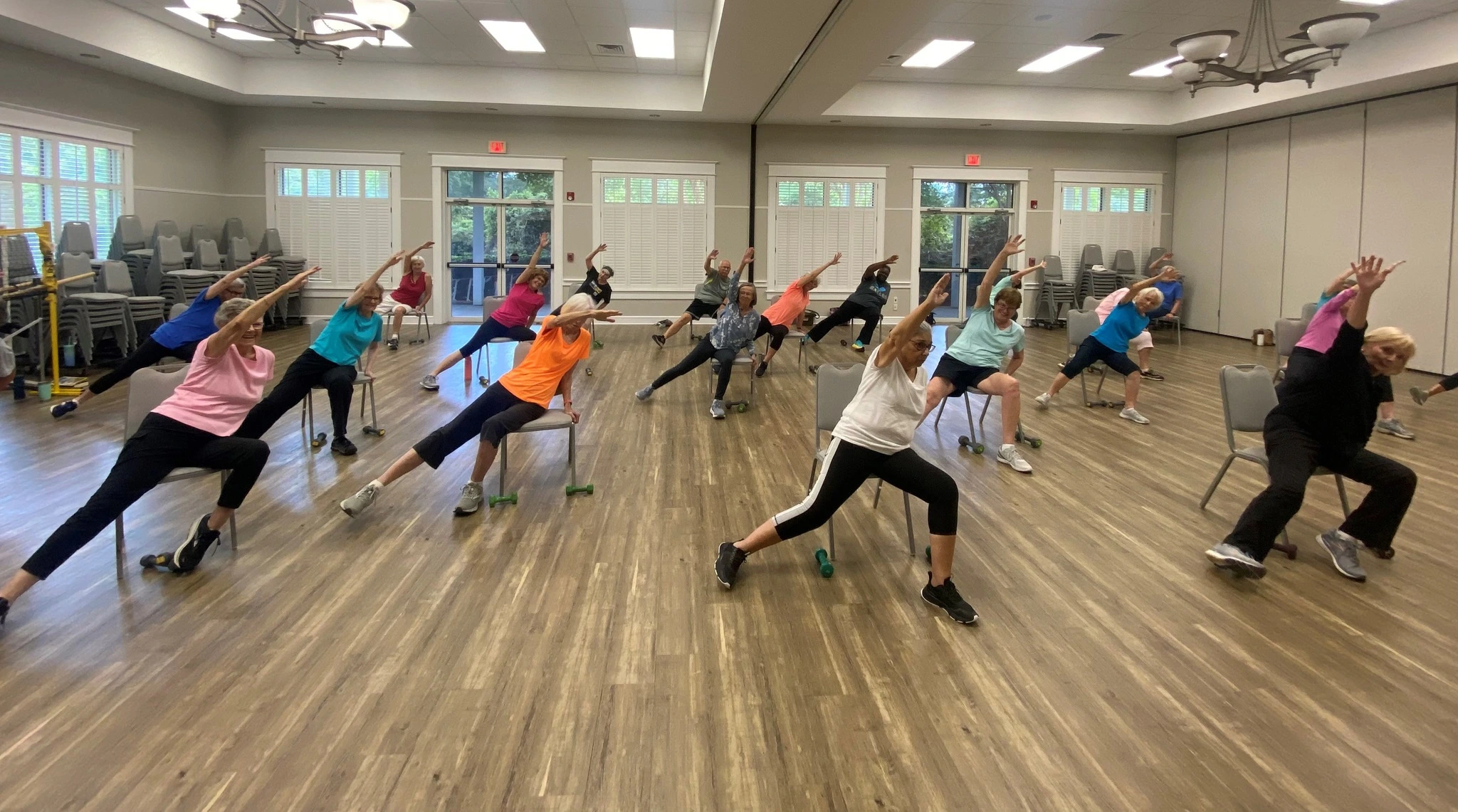
Exercises that can support strength and balance include:

  • Squats
  • Step-ups
  • Heel raises
  • Single-leg balancing exercises 
  • Tai chi
  • Chair stands

The Centers for Disease Control and Prevention (CDC) recommends that older adults include muscle-strengthening activities at least two days per week and balance activities as part of a well-rounded routine.

Muscle plays a role in metabolism and blood sugar control

Muscle is metabolically active tissue, which means it helps your body use and store glucose, or blood sugar. Maintaining active muscle tissue can support insulin sensitivity and healthier blood sugar regulation. It may also help reduce fat gain that can happen when activity levels decline with age. 

Muscle is one of the major organs in the body that contains high concentrations of mitochondria, which are organelles inside our cells that generate adenosine triphosphate (ATP), the main energy currency in the body. 

“Your muscles act like a storage site and user of fuel,” says Dr. McPherson. “When your muscles are active and strong, your body is generally better equipped to handle the energy from food, which can support a healthy metabolism.”

This is one reason strength training can be especially helpful for people who are focused on healthy aging, weight management or reducing their risk of metabolic conditions.

Muscle and brain health

Regular resistance training may help prevent dementia. There is a direct relationship between muscle health and brain health, with lower muscle strength and weaker grip strength being associated with a higher risk of Alzheimer’s disease and cognitive decline. Dysfunctional mitochondria in muscle cells are linked to higher levels of brain amyloid deposits, which are associated with Alzheimer’s disease. 

Muscle helps protect your bones and joints

Strength training places healthy stress on your bones, which can support bone density. Strong muscles also help absorb force and support your joints during daily movement.

Maintaining leg and hip strength is especially important for people concerned about osteoporosis, joint stiffness, arthritis or loss of mobility.

If you have arthritis, osteoporosis, a joint replacement or chronic pain, ask your healthcare provider for individualized guidance. The right exercise plan should challenge your muscles safely without worsening pain or placing unnecessary stress on vulnerable joints.

Muscle supports recovery after illness, injury or surgery

Think of muscle as a reserve your body can draw from during a health setback.

People can lose strength quickly during bed rest, hospitalization or periods of reduced activity. Having better baseline strength may make it easier to recover after an illness, injury or surgery.

  • McPherson listens to heart

    “Think of muscle as a physical bank account. The more strength you build and maintain, the more reserve your body has if life temporarily slows you down.”

    – Dr. McPherson

This is especially important for older adults, but it applies at every stage of life. Building strength now can help support resilience later.

How to maintain muscle as you age

You don’t need to become a bodybuilder to maintain muscle. Small, consistent habits can make a meaningful difference.

Dr. McPherson recommends these practical steps:

Aim for a full-body routine that works your legs, hips, back, core, chest, shoulders and arms. Strength training can include weights, resistance bands, weight machines or bodyweight exercises. 

When to get professional guidance

Talk to your healthcare provider before starting or changing your exercise routine if you:

  • Have balance issues
  • Have heart disease, arthritis, diabetes or osteoporosis
  • Have had a recent fall
  • Are unsure how to exercise safely
  • Have unexplained weakness or weight loss
  • Are recovering from hospitalization or surgery
  • Have pain that limits your activity

A personalized plan can help you build strength safely and choose exercises that fit your health history, goals and current fitness level.


It’s never too late to build strength

strength-training-muscle-900x600-1“Maintaining your muscle mass is one of the most practical ways to support healthy aging,” says Dr. McPherson. “Building and preserving muscles can help you stay independent, metabolically healthier and better able to recover after a health event. It’s never too late to start. Even small, consistent strength training habits can make a meaningful difference.”

The takeaway is simple: Muscle helps you live better. By combining strength training, protein, regular movement and guidance from your healthcare provider, you can support your body for the life you want to keep living.