
Every 40 seconds, an American suffers a stroke; every four minutes, somebody dies from one. The dangerous result of the brain being deprived of blood, a stroke can strike quickly and do irreparable damage, making a rapid medical response vital. Could you spot the signs in an emergency?
Recognize the signs
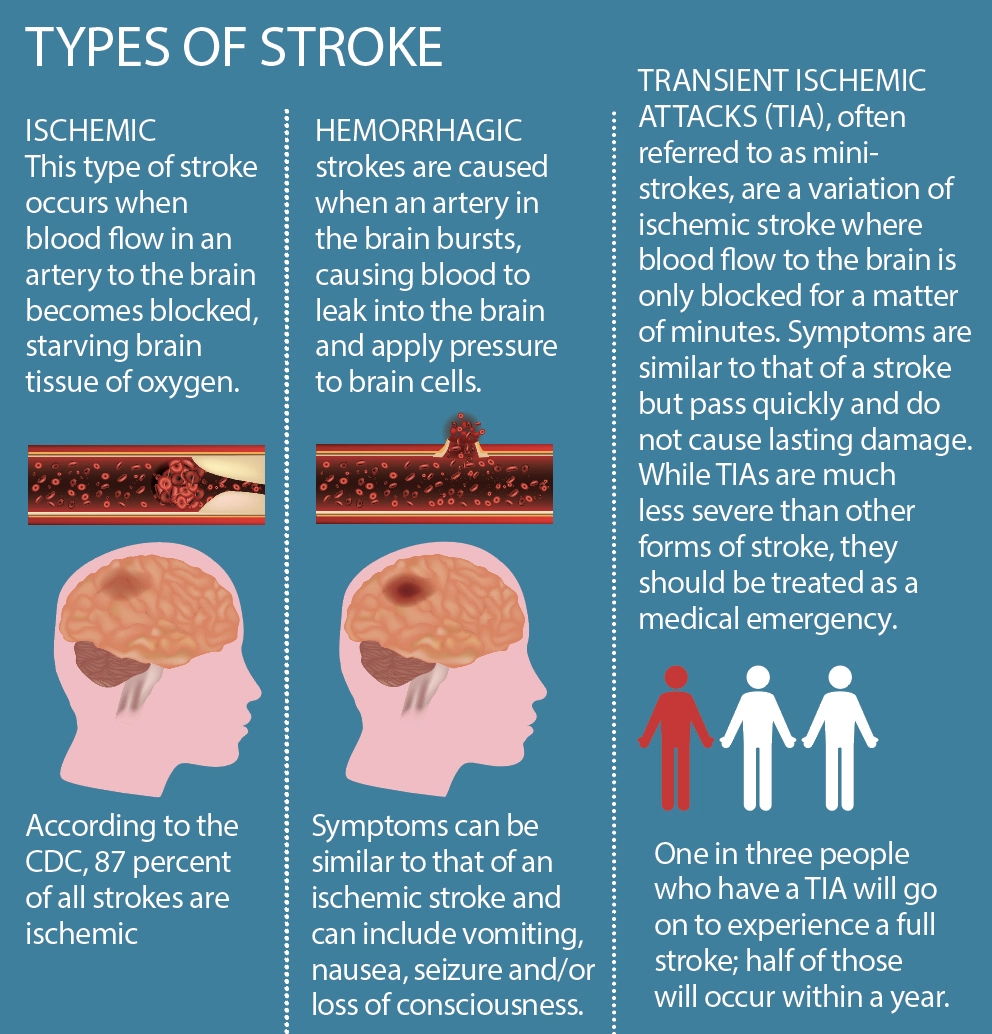
Stroke manifests in a variety of ways. In the more common ischemic stroke, a narrowed or blocked artery prevents blood and oxygen from flowing to the brain. A hemorrhagic stroke occurs when an artery in the brain bursts, causing bleeding in the brain.
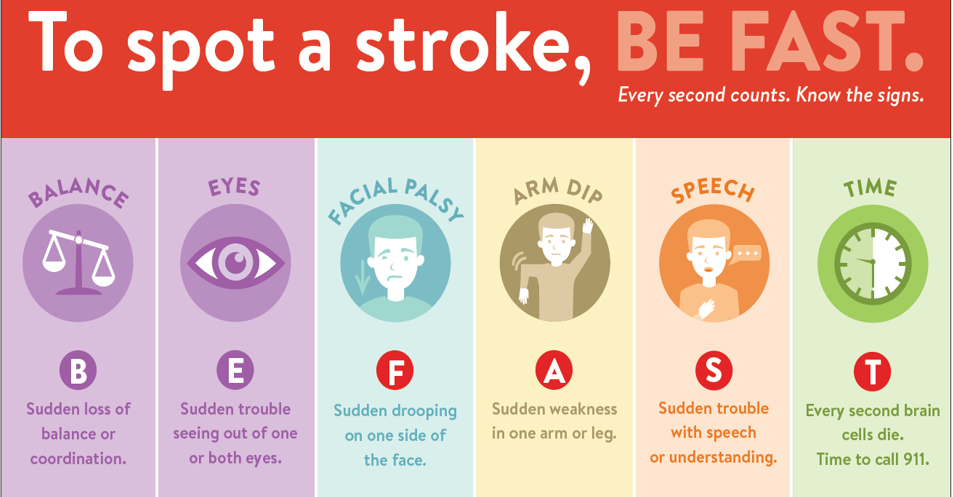
Both present with similar symptoms that may vary depending on the location of the blockage. To help people quickly identify a stroke, physicians promote the acronym BE FAST:
- Balance: Sudden loss of balance or coordination
- Eyes: Sudden loss of vision in one or both eyes, or seeing double
- Face: Uneven smile or drooping to one side
- Arm: Weakness or numbness in one arm
- Speech: Slurred speech, difficulty speaking or inability to understand
- Time: Call 911 immediately
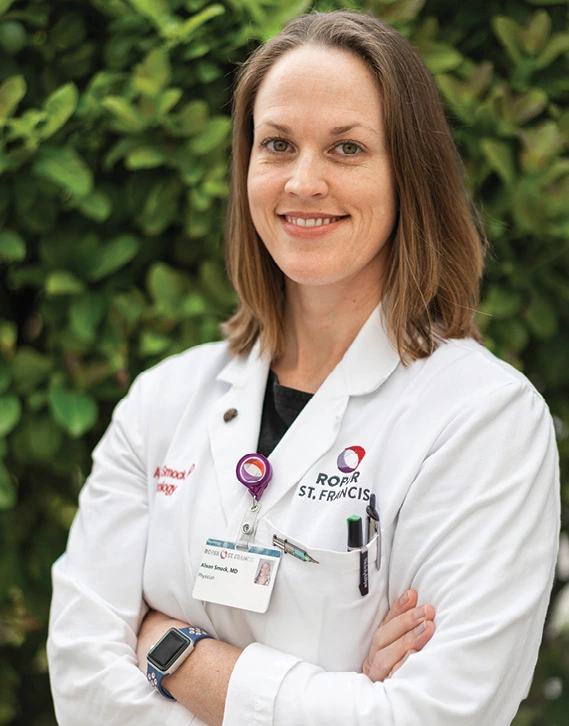
“At the onset of symptoms, brain tissue hasn’t died, it’s just starving,” explains Roper St. Francis Healthcare Stroke Program medical director and vascular neurologist Dr. Alison Smock. “That’s why it’s so important to get treated quickly. The faster we restore blood flow to the brain, the lower the risk of brain damage, disability or death.”
Respond quickly
“A CT scan to check for brain hemorrhaging is the first step,” says Dr. Smock. If no bleeding is evident and the patient otherwise meets criteria for treatment, physicians will recommend tenecteplase (TNK), the gold standard for treating ischemic stroke. This clot-busting medication must be administered within four and a half hours of when the patient last seemed normal/well. All patients are also emergently evaluated for candidacy for a mechanical thrombectomy, a minimally invasive procedure to remove the brain blockage.
In the case of hemorrhagic stroke, doctors work to control the bleeding and reduce blood pressure using medications and, sometimes, surgery. “But most don’t require surgical intervention and can be medically managed,” Dr. Smock explains.
Face reality
Only about 10 percent of stroke patients recover completely. A quarter experience minor impairments, while 40 percent suffer moderate to severe impairments, making stroke the nation’s leading cause of long-term disability. Approximately 140,000 of the nearly 800,000 Americans who have a stroke each year die from the episode.
“Cruelly, if a stroke doesn’t kill you, it can leave you severely disabled,” laments Dr. Smock, underscoring that immediate treatment can minimize lasting effects such as difficulty walking or controlling the arms and hands. Depression is also common, a result of the situation as well as an altered brain chemistry. Therapy can help improve motor strength, coordination, mental health and independence.
Know the risks
Genetics, age, gender and race all contribute to a person’s risk in addition to typical vascular risk factors and chronic medical conditions, with the chance for stroke doubling every decade after age 55. Stroke is also more prevalent among men until age 85, when women become higher risk, and twice as likely in Blacks than in whites. Having a history of stroke also puts a person in danger. “One in four survivors will experience another stroke,” notes Dr. Smock.
“But 80 percent of strokes are preventable,” she adds. Many risk factors, such as hypertension, high cholesterol, diabetes, atrial fibrillation, vascular disease, smoking, sedentary living, obesity and untreated sleep apnea, can be modified and controlled. While healthy living doesn’t make you bulletproof, nutritious eating, physical fitness and proper medication will serve you well.
Remember...
Editor’s Note: This blog is an excerpt from the article “Could You Spot a Stroke?,” originally authored by Dustin Waters and featured in the Spring 2020 issue of House Calls.
-
 Treatments & Conditions Roper St. Francis Healthcare launches Mobile Care for You unit to expand access across Lowcountry
October 1, 2026 5 Minute Read
-
 Healthy Living A primary care doctor’s best advice before your first visit
July 23, 2026 3 Minute Read
-

-
 Technology & Innovation Trailblazing cancer care: CAR T-cell therapy arrives at Roper St. Francis Healthcare
March 19, 2026
-
 Treatments & Conditions A high-pressure situation: Is this chest discomfort the sign of a heart attack or merely indigestion
February 13, 2026
-
 Our Impact Mental Health Awareness: Recognizing and Addressing Common Disorders
February 2, 2026 12 Minute Read
-
 Treatments & Conditions The Role of Preventive Screenings in Healthcare
January 29, 2026 5 Minute Read
-
-

-

-
 Healthy Living Understanding creatine: Dr. McPherson’s view on its role in strength and aging well
November 18, 2025
-
 Treatments & Conditions Enjoying the holidays with diabetes: Tips for a healthy happy season
November 13, 2025
-
 Treatments & Conditions Epilepsy: What is it how’s it treated and why hope is a part of the plan
November 12, 2025
-