
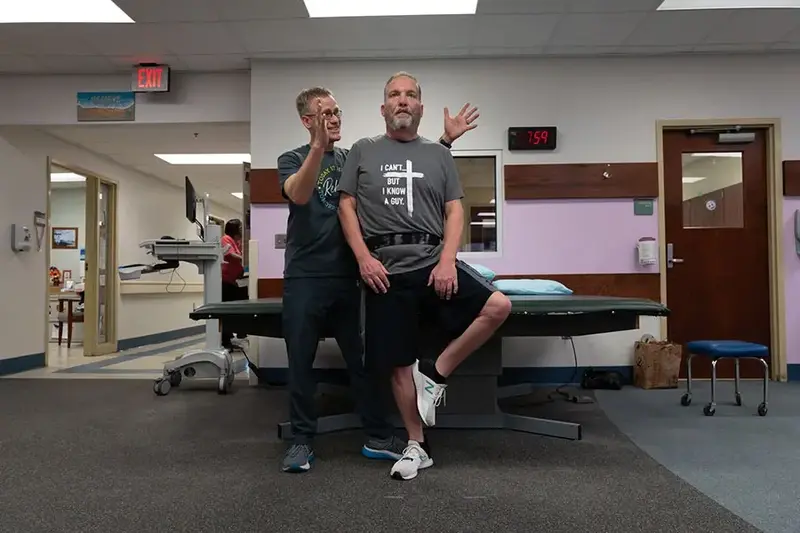
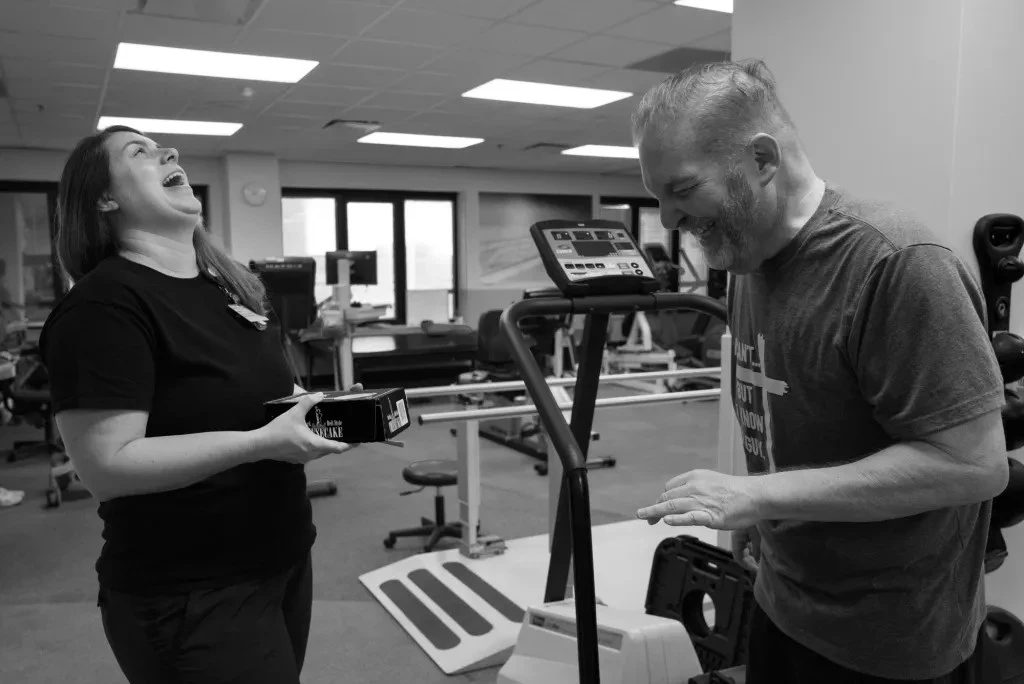
In the gym on Roper Hospital’s sixth floor, Shannon C. shimmied, swayed and stepped in rhythm, dancing with his therapy team after months of rigorous rehabilitation. The playful moment marked a milestone in his recovery journey.
After suffering a severe condition that threatened to take away his ability to walk on his own, Shannon found hope and healing through the dedication of his caregivers.
“I can’t say enough how much they’ve changed my life,” Shannon said.
Their support and encouragement helped the former police officer and professional wrestler regain his strength, culminating in this celebratory dance, which was a testament to the power of resilience and compassionate care.
“Shannon’s recovery is nothing short of a miracle,” said Dr. George Khoury, the neurosurgeon who aided in the treatment of Shannon’s spinal cord condition.
A critical surgery

Last fall, Shannon was admitted to Bon Secours St. Francis Hospital with cervical myelopathy, a severe spinal cord condition that had left him with excruciating neck pain and weakening limbs. This condition is due to severe compression and swelling of the spinal cord due to disc disease and bony compression. His case was further complicated by an enormous thyroid goiter, nearly the size of a human heart.
A team of specialists, led by Dr. Khoury and Dr. Matt Scarlett, an otolaryngologist, performed a delicate dual surgery, removing the goiter and decompressing and fusing Shannon’s spinal cord.
“The surgery seemed to go as expected,” Dr. Khoury said. “But Shannon woke up with increased weakness in his extremities.”
An urgent MRI confirmed the team’s fears: Shannon’s spinal cord was swelling, a dangerous condition that can lead to pain, nerve damage and paralysis. The increased swelling could have occurred at any moment prior to surgery.
“The prompt diagnosis and treatment by the team prevented further deterioration,” Dr. Khoury said. “Cervical myelopathy is a very serious, dangerous and rare diagnosis that must be handled by an experienced team. We are fortunate to have an exceptional one.”
Within moments, the hospital team leaped into action. Steroids were administered, Shannon’s neck was stabilized, and intensive monitoring began in the ICU.
“I couldn’t move my legs when I woke up,” Shannon said. “I could feel them, but it was like they weren’t mine.”
Slowly over the next four days, movement in his feet and his legs began to return. Recovery would not come easily, but first impressions made by the ICU team at Bon Secours St. Francis Hospital gave him the hope he needed to continue.
“They were so upbeat, and I could tell they really cared,” Shannon said. “Though I was really overwhelmed, I knew I could lean on them and my faith to get me through.”
The journey to walk again

When Shannon was transferred to Roper Rehabilitation Hospital, he embarked on the most difficult challenge of his life: relearning to stand, walk and regain control of his body.
Shannon had a long career in law enforcement, serving as a patrol officer for many years, and moving up through the ranks as detective, sergeant and captain. He retired last year as captain of criminal investigations for the Myrtle Beach Police Department. He also wrestled professionally for about twenty years and is a certified hypnotist.
Decades of discipline from the demands of law enforcement and mental and physical toughness of professional wrestling conditioned Shannon to push through adversity. That same grit would become an asset in recovery.
For three weeks, his therapists pushed him. Shannon told the team not to let up.
“It took every ounce of strength I could muster to stand with a walker for one minute,” Shannon said. “It was the hardest thing I’ve ever done.”
His first time in the therapy gym, Shannon arrived in a wheelchair. By the time he was discharged from Roper Rehabilitation Hospital, he could walk with a walker.
“I felt like Frankenstein’s monster when I first started walking,” Shannon said. “It was all I could do just to get those legs to work.”
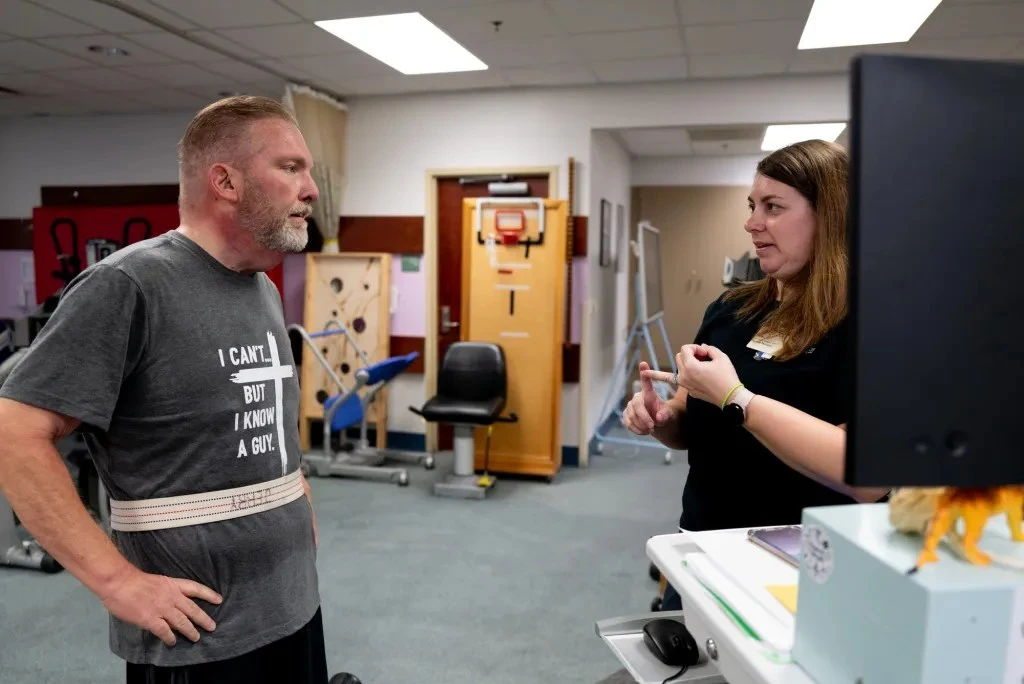
He would return to his room every day exhausted, but he knew his hard work would be worth it. He said his primary physical therapist, Stacie Mckinley, and occupational therapist, Mira Kraft, were incredibly supportive during his inpatient stay at the Roper Rehabilitation Hospital.
“I wanted them to push me,” Shannon said. “And they did.”
Leaning on his team

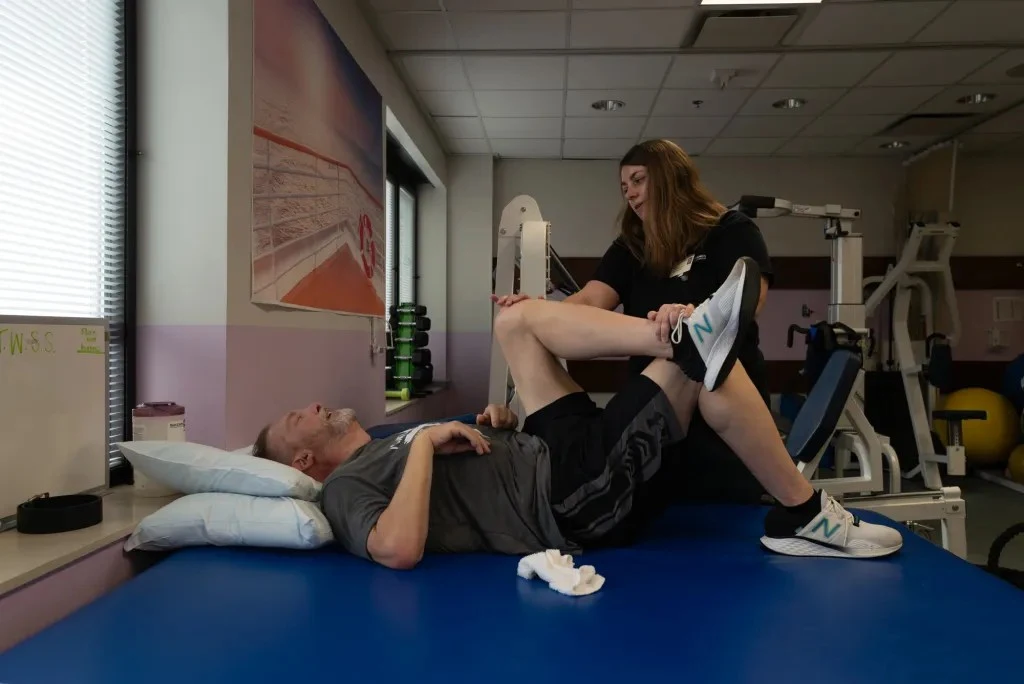
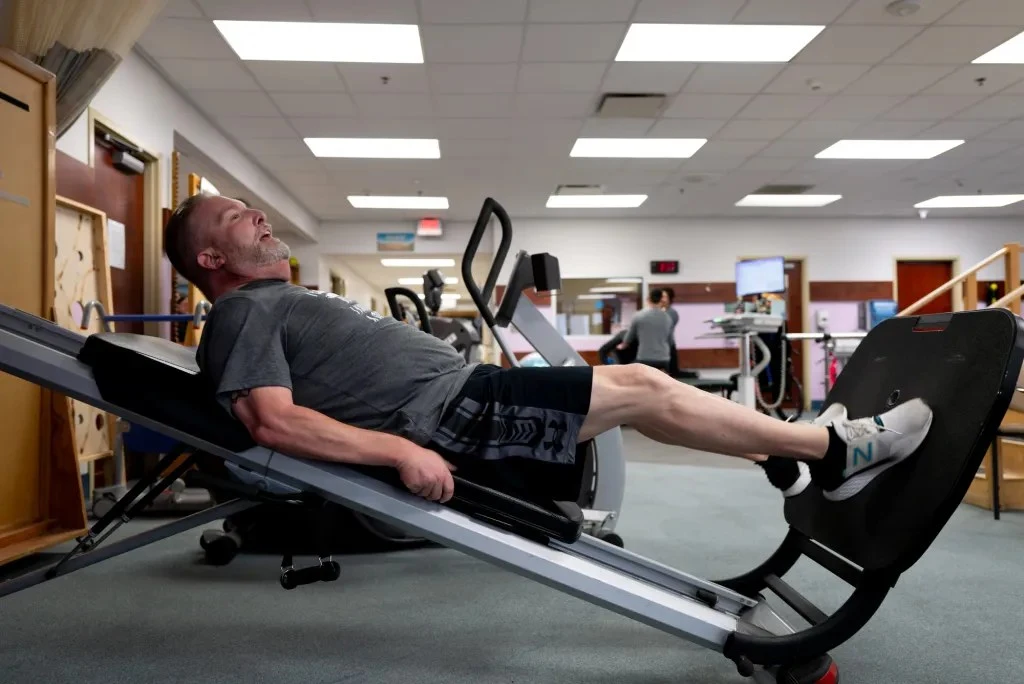
Shannon was discharged from Roper Rehabilitation Hospital on a Friday in November. He started outpatient physical and occupational therapy the following Monday on the sixth floor with Roper Rehabilitation Services. His primary therapists in that department are physical therapist Jennifer “Kyle” Cooper, occupational therapist Jerry Hurst and physical therapy assistant Lonnie Castellano.
His progress was measured in feet. He used a walker to go 230 feet in six minutes, then 760 feet, then 1,420. Finally, he walked 1,400 feet without a walker.
“Everything we did while I was in the rehabilitation hospital was a building block for what I have accomplished in outpatient therapy,” Shannon said. “I’m in better shape now than I was before the surgery.
Today, Shannon walks 2 miles unaided. He can also run and dance. The transformation is both medical and personal — a testament to perseverance, faith and the dedication of his rehabilitation team.
“The success I’ve had is because of the incredible therapists and staff at Roper St. Francis Healthcare,” Shannon said. “They cared about me, not just as a patient, but as a person.”
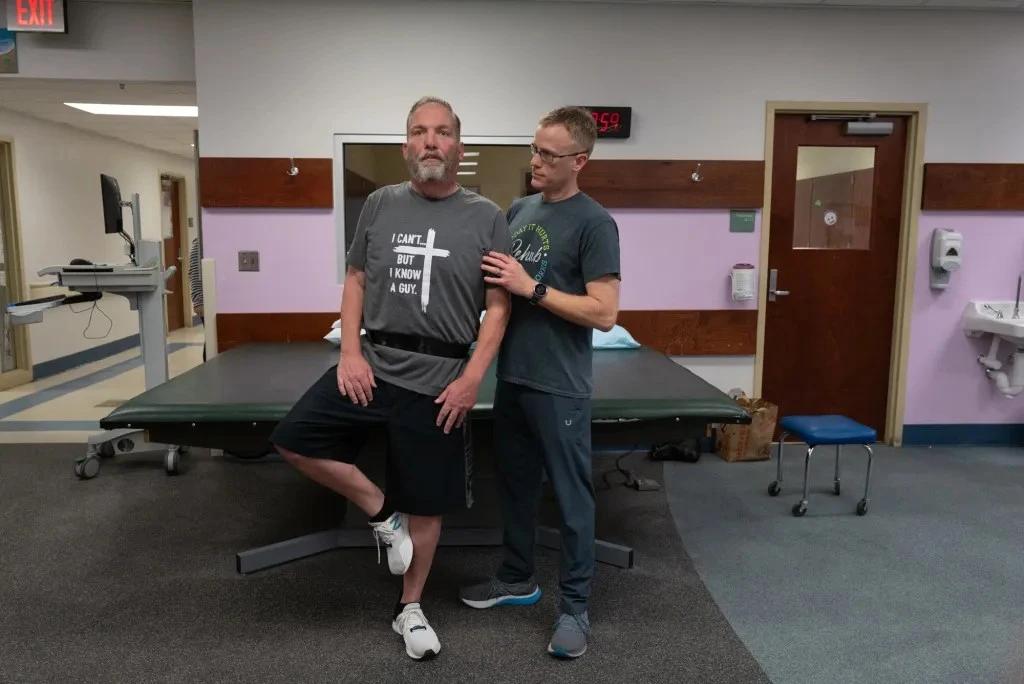
He recalled a moment working with Cooper when she was testing his ability to lean. She told him to lean back into her hands, and he surprised her.
“You lean more than any other patient I’ve had since I’ve worked here,” she told him.
That trust had been established the day he woke up in the ICU, Shannon explained.
“From the first impression made in the ICU to the team at the rehabilitation hospital, they all showed they built on one another,” he said. “The trust was there. I knew they had my best interest at heart.”
To trust someone to catch you is very personal, he said. But he knew Cooper wouldn’t be asking him to lean if it wasn’t important for his recovery.
“And so, I leaned in,” he said.
Walking with him
Dr. Khoury, who has practiced for 30 years, has seen remarkable recoveries, but Shannon’s stands apart.
“From Day 1, he was committed,” Khoury said. “His determination not only inspired our team but played a key role in his healing.”
For Shannon, this journey was about more than recovery; it was a revelation. His faith, coupled with the expertise and compassion of his medical team, turned his uncertainty into hope.
“God doesn’t make mistakes,” he said. “I believe he put these people in my life for a reason.”
Today, every step he takes is a reminder of the strength within him — and of those who walked beside him through it all.
Looking for relief that gets you back on your feet? Learn more about Roper St. Francis Healthcare’s spine and back pain services by calling 843-723-8823 or visiting www.rsfh.com/neuroscience/spine-back-services/.
Visit Roper Rehabilitation Hospital or Roper Rehabilitation Services to learn more.
Story by Communications Specialist Mia Mendez and photos by Creative Services Manager Josh Benser, unless otherwise stated.
-
 Our Impact The Berkeley Hospital Mammography Team receives Excellence in Action Award
February 6, 2026
-
 Our Impact Mental Health Awareness: Recognizing and Addressing Common Disorders
February 2, 2026 12 Minute Read
-

-

-
 Treatments & Conditions Back in action: How spine surgery helped Larry reclaim the life he loves
August 27, 2025
-
 Community Health Roper Hospital oncology patients find healing through friendship
September 23, 2024
-
-
-
 Our Stories Roper St. Francis teammate shares her late son’s story in honor of Donate Life Month
April 11, 2023
-
-
Community Health Friendship leads to healing for Roper St. Francis Healthcare teammate and Bahama resident
February 23, 2023
-
-
 Our Stories From caregiver to patient to caregiver again: One teammate’s battle with breast cancer
May 27, 2021
-
 Our Stories Berkeley Hospital caregivers reunite with former patient with life-threatening complication
May 13, 2021