
Welcome back to “Maybe It’s Menopause.” In Part 2 of this five-installment series, we look at the significant swing of hormones from puberty to menopause.
As women age, these all-important chemical messengers adapt according to the body’s needs. Growth hormone, for example, is heightened during childhood and surges at puberty but declines as we get older. By the age of 55, our growth hormone levels drop by about one-third what they measured during early adulthood, which can negatively impact muscle strength, energy levels and fat distribution.
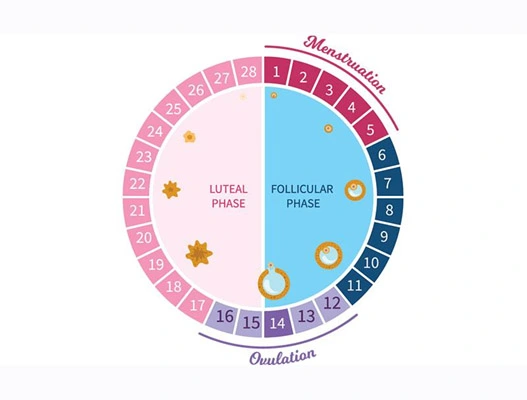
Sex hormone production also fluctuates as we get older. Anytime a woman is in a transitional phase such as puberty, pregnancy or middle age, the pituitary gland floods the ovaries with luteinizing hormone and follicle-stimulating hormone to rev up the secretion of sex hormones in the ovaries. (For a clearer picture of the hormonal waves associated with the menstrual cycle and pregnancy, look at The Flow Chart below.)
“From an endocrine standpoint, the two most difficult points in a woman’s life are puberty and perimenopause,” explains Dr. Betty Raney, a Roper St. Francis Healthcare OB/GYN. Beginning in girls as early as age nine, a dramatic boost of sex hormones signals the start of adolescence and prompts the maturation of reproductive organs. “During puberty, we go from secreting no sex hormones to hormones switching off and on, which can cause mood swings, acne and pelvic pain with periods. That process smooths out in our 20s and 30s, until another massive swing throws us back to where we started,” continues the doctor. In their late 40s and early 50s, women undergo a rapid decline in estrogen production.
The Flow Chart
A brief look at the hormonal shifts that take place during a woman’s menstrual cycle and pregnancy
Day 1: First day of her period
Days 1-14: Estrogen production gradually increases
Day 14 (ish): Ovulation occurs; estrogen levels spike and progesterone production begins
If conception does not occur:
Day 22: Progesterone levels peak
Days 23-28: Estrogen and progesterone gradually decline as the next period approaches, resulting in physical symptoms such as breast tenderness, headaches, bloating, depression and mood swings (PMS, for short)
If conception occurs:
Day 21: The body begins producing the pregnancy hormone human chorionic gonadotropin (hCG); levels of hCG double every two days during the first 10 weeks of pregnancy
Week 8: The placenta takes over progesterone production from the ovaries
Week 12: Estrogen and progesterone levels rise to nearly 1,000 times higher than their baseline
Birth: Estrogen and progesterone levels quickly plummet while prolactin and oxytocin levels surge
*While many other factors are also at play, the post-birth hormonal roller coaster can trigger postpartum depression in as many as 15% of women. If you find yourself feeling hopeless, crying easily or thinking about harming yourself or your baby, seek immediate help from your OB-GYN.
Cue Menopause The Musical. The curtain goes up on this topic in the next installment of this blog series, Maybe it’s menopause: Changes are a’comin’ – perimenopause and menopause.
-
 Healthy Living A primary care doctor’s best advice before your first visit
July 23, 2026 3 Minute Read
-
_Cropped-HorizontalCard-Small.webp?language=en)
-

-
 Treatments & Conditions Roper St. Francis Healthcare expands interventional pain management capacity
June 5, 2026
-
 Treatments & Conditions Simple stretches and exercises to improve your golf or tennis game
May 27, 2026
-
 Treatments & Conditions Stumbling block: The dangers of deep vein thrombosis - Roper St. Francis Healthcare | Health News Blog | Charleston, SC
May 11, 2026
-
 Technology & Innovation Roper St. Francis Healthcare first in region to offer new spinal cord injury technology
May 1, 2026
-
 Treatments & Conditions What to know about radiation treatment when you’re first hearing the news
April 14, 2026
-
-

-
 Technology & Innovation Trailblazing cancer care: CAR T-cell therapy arrives at Roper St. Francis Healthcare
March 19, 2026
-
 Treatments & Conditions Epilepsy: What is it, how's it treated and why hope is a part of the plan
March 17, 2026 3 Minute Read
-

-
 Our Stories Gynecologic cancers: How brachytherapy afterloaders improve survival reduce side effects
March 12, 2026
-
 Our Stories Why personal attention may be the secret weapon for Bone Marrow Transplant BMT success
March 12, 2026